
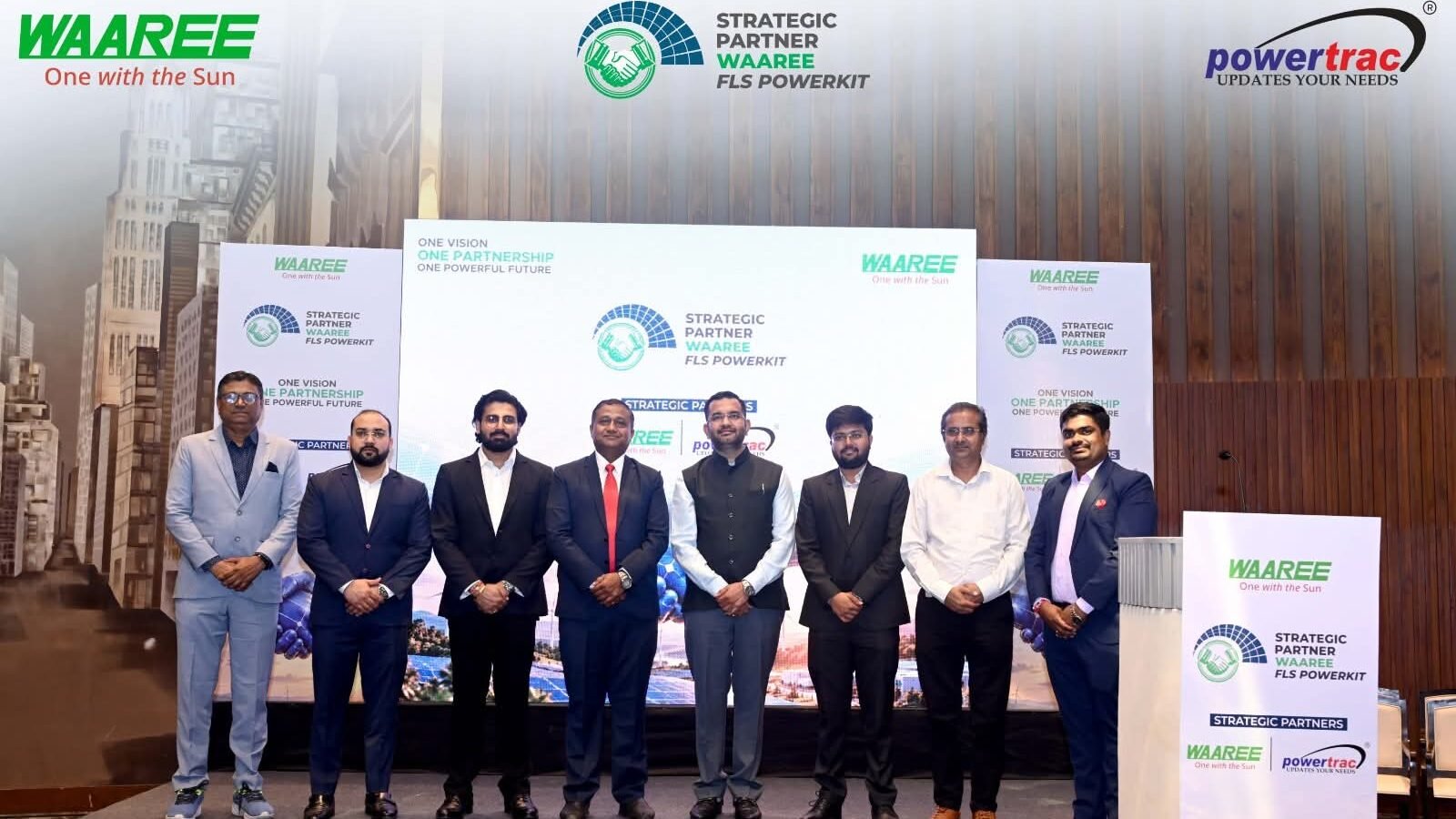
The WAAREE FLS Kit combines solar modules, inverters, transformers and other plant equipment to support feeder-level solarisation projects under PM-KUSUM and other distributed renewable energy programmes.
Key Highlights
- Product Name – WAAREE FLS Kit
- Partners – WAAREE Energies & POWERTRAC Group
- Target Segment – 11 kV Feeder-Level Solarisation
- Primary Target – PM-KUSUM, DREBP, DISCOM Agricultural Solar Feeders
- Key Package ComponentsDCR Solar Modules, Inverters, Distribution Transformers, MMS, BOS & Plant Switchgear
- Target Customers – Solar EPC Contractors, Turnkey Project Developers, State DISCOMs
- Launch Date – October 8, 2026
- Ahmedabad, Gujarat
WAAREE and POWERTRAC have launched an integrated solar equipment package designed for 11 kV feeder-level solarisation projects in India, targeting developers, engineering, procurement and construction (EPC) contractors, and distribution utilities involved in decentralised renewable energy deployment.
The product, branded as the WAAREE FLS Kit, brings together key components required for ground-mounted solar power projects under a consolidated offering. The initiative is aimed at simplifying equipment procurement and coordination for projects associated with agricultural feeder solarisation, the PM-KUSUM scheme and other distributed renewable energy programmes.
The launch event was held on October 8, 2026, at Club O7, The Forum, Inperia, Ahmedabad.
WAAREE FLS Kit : Key Components
The integrated package includes domestic content requirement (DCR) solar modules, inverters, transformers, module mounting structures (MMS), balance-of-system (BOS) components and plant electrical equipment.
By bringing these components together, the offering seeks to reduce the complexity of sourcing equipment from multiple suppliers and improve coordination during project planning and execution.
DCR-compliant modules are particularly relevant for projects where domestic-content requirements apply. Inverters convert the electricity generated by solar modules into alternating current, while transformers and associated electrical infrastructure support voltage conversion and grid connectivity.
The mounting structures and BOS components provide the supporting infrastructure required for solar plant installation.
The company announcement positions the kit as an integrated equipment solution. However, specific kit capacities, equipment models, pricing and project-wise deployment targets have not been disclosed in the available information.
Targeting PM-KUSUM and Distributed Solar Projects
The WAAREE FLS Kit is designed for applications spanning PM-KUSUM projects, DREBP initiatives, DISCOM-led solarisation programmes and distributed utility-scale solar developments.
Feeder-level solarisation involves supplying electricity to designated distribution feeders through solar generation connected to the distribution network. It is particularly relevant to agricultural electricity supply, where solar power can help meet demand during designated supply periods.
Under the PM-KUSUM scheme, Component C covers the solarisation of grid-connected agricultural pumps and feeder-level solarisation. These projects can support greater renewable energy integration into agricultural electricity supply and help distribution companies manage their power procurement requirements.
For developers and EPC contractors, an integrated equipment package may simplify procurement planning and coordination between generation equipment and electrical infrastructure. Actual project savings and execution timelines will depend on equipment specifications, contractual arrangements, logistics and site conditions.
Industry Participation and Market Opportunity
The October 8 launch event in Ahmedabad brought attention to the potential role of integrated equipment packages in Gujarat’s feeder-level solarisation market. Industry coverage reported participation from more than 100 developers and EPC contractors, with discussions focused on opportunities associated with DREBP and PM-KUSUM projects.
The launch comes as distributed solar deployment requires coordination among module suppliers, inverter manufacturers, transformer providers and other electrical equipment vendors. A consolidated offering could provide project developers with a more coordinated procurement route, particularly for installations with defined technical and grid-integration requirements.
However, the launch announcement does not establish a confirmed order book, customer-wise supply contracts or a specific volume of projects secured through the product.
Potential Implications for Solar EPC Contractors
The main proposition of the WAAREE FLS Kit is equipment integration rather than the addition of new solar generation capacity.
For EPC contractors, a bundled package could simplify vendor coordination, support equipment compatibility planning and help align procurement with construction schedules. For developers, the approach may reduce the administrative burden associated with managing multiple equipment suppliers.
The commercial significance of the offering will depend on pricing, availability, delivery schedules, technical compliance and adoption by developers and distribution utilities.
Neither a specific price per megawatt nor a quantified cost-saving estimate has been disclosed in the available announcement.
What Comes Next?
The WAAREE FLS Kit provides an integrated equipment option for feeder-level solarisation and distributed renewable energy projects. Its potential market reach will depend on participation in tenders, confirmed customer orders and successful deployment across eligible projects.
Further details regarding product configurations, supply agreements, pricing and deployment volumes will be important in assessing its commercial contribution to India’s distributed solar market.
For now, the launch represents a targeted equipment-supply initiative supporting feeder-level solarisation, with PM-KUSUM and DISCOM-led projects among its intended applications.