
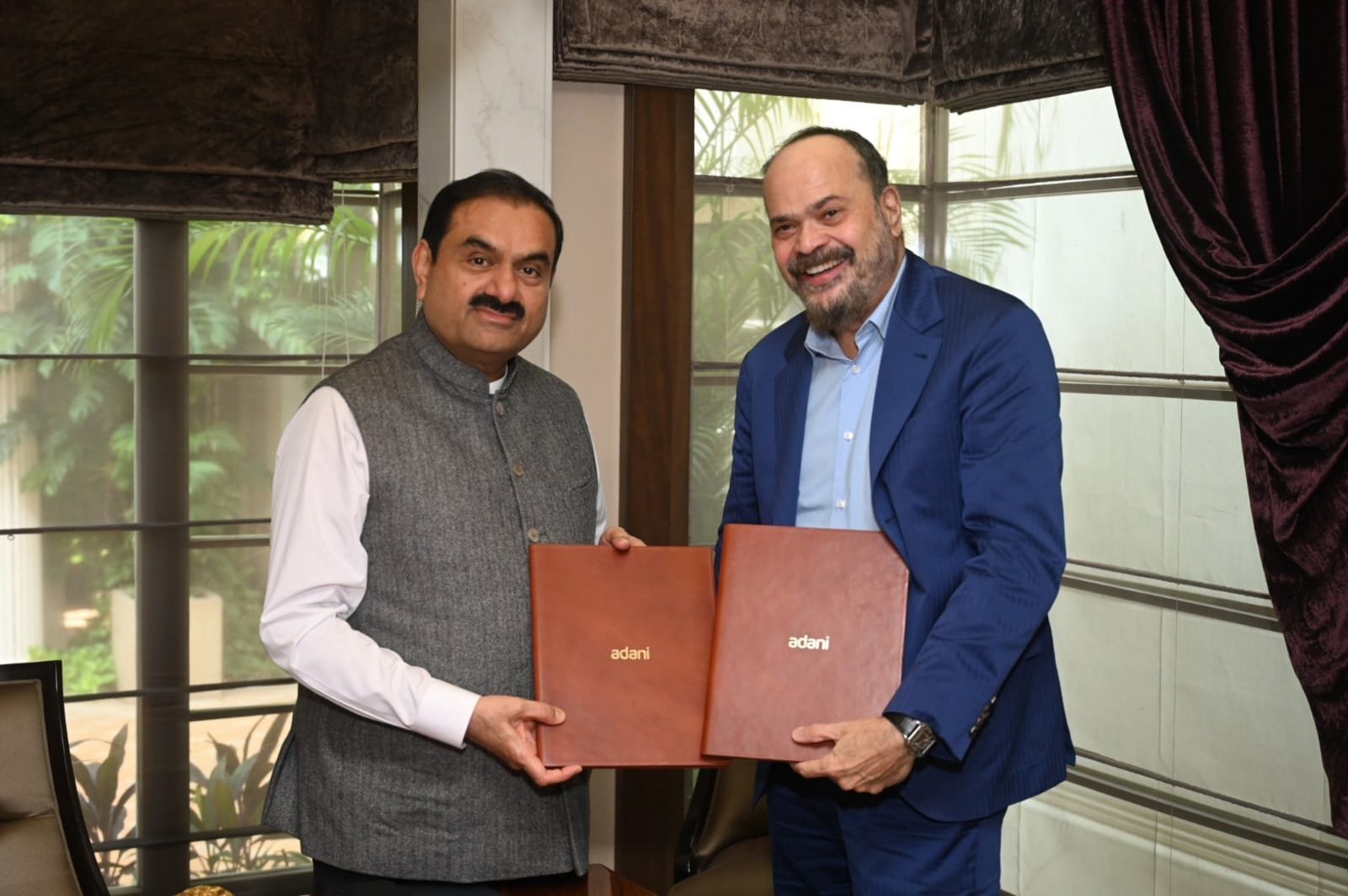
The proposed partnership will manufacture AI racks, servers, networking equipment, power distribution systems and liquid-cooling solutions in India, targeting domestic and global data centre demand.
Key Highlights
- Partners – Adani Enterprises Limited (AEL) & Jabil Inc.
- Partnership Structure – 50:50 Joint Venture
- Target Scale – Multi-gigawatt AI rack manufacturing platform
- Core Hardware Portfolio – AI racks, high-performance servers, storage systems, and networking equipment
- Power & Thermal Systems – Power distribution units (PDUs), transformers, and liquid-cooling systems
- Services Offered – Hardware manufacturing, assembly, installation, and commissioning
- Manufacturing Location – India (specific site/plant location yet to be disclosed)
- Target Market – Domestic & export demand; serving hyperscale’s, neoclouds, and data centers
- Domestic Market Opportunity – India’s data center capacity projected at 5–8 GW by 2030 (>$50B hyperscale spend)
- Global Market Opportunity – Estimated $3+ trillion over the next 7 years
- Adani Group Contribution – Energy, land, and infrastructure backed by a $100B commitment for 5 GW AI data centers by 2035
- Jabil Inc. Contribution – Global precision engineering, assembly, and supply chain scale ($36B FY2026 revenue)
- Financials & Timelines – Total capex, production rollout dates, and hiring targets are undisclosed
- Current Status – Non-binding MoU
Adani Enterprises Limited (AEL), the flagship company of Adani Group, and US-based engineering and manufacturing company Jabil Inc. have signed a non-binding Memorandum of Understanding (MoU) to establish a proposed 50:50 joint venture for manufacturing and assembling artificial intelligence (AI) and data center equipment in India.
Announced on October 13, 2026, the proposed partnership aims to develop a multi-gigawatt AI infrastructure manufacturing platform to serve hyperscalers, neocloud providers, data centre operators and enterprises in India and international markets.
The proposed joint venture remains subject to definitive agreements, applicable approvals and customary conditions. The companies have not yet disclosed the investment amount, manufacturing location or expected commercial production date.
Proposed Manufacturing Portfolio
The joint venture would manufacture and assemble AI racks, servers, storage systems and networking equipment used in modern data centres. These products would support high-performance computing systems designed for AI applications, cloud services and other data-intensive workloads.
The proposed portfolio would also include supporting electrical and thermal management infrastructure, such as power distribution units, transformers and liquid-cooling systems. The venture would additionally provide installation and commissioning services.
The companies expect the manufacturing platform to have multi-gigawatt AI rack capacity, supporting computing systems with a combined power capacity of several gigawatts. However, specific annual production targets and manufacturing timelines have not been disclosed.
India’s Data Centre Market Opportunity
India’s data centre capacity is projected to reach 5–8 GW by 2030, driven by increasing AI adoption, cloud computing demand and data localisation requirements.
The announcement also points to more than $50 billion in planned hyperscaler spending across data centres, cloud infrastructure and AI ecosystems. This broader spending outlook highlights the potential demand for equipment required to build and operate large-scale computing facilities.
The companies estimate the global market opportunity at more than $3 trillion over the next seven years as investment in AI computing infrastructure accelerates. This represents the estimated broader market opportunity rather than projected revenue for the proposed joint venture.
By establishing a manufacturing base in India, the partnership aims to address domestic demand while supporting exports to international customers.
Adani Group’s AI Infrastructure Strategy
The proposed venture aligns with Adani Group’s commitment to invest $100 billion in developing 5 GW of green-energy-powered, hyperscale AI-ready data centres by 2035, as outlined in the announcement.
The partnership would expand the group’s presence beyond energy supply and data centre infrastructure into the manufacturing of critical hardware used in AI computing facilities.
The strategy brings together several interconnected requirements of AI infrastructure, including electricity supply, computing hardware, power distribution and cooling systems. Reliable electricity and effective thermal management are particularly important for facilities operating high-density AI computing equipment.
Adani Group Chairman Gautam Adani said the proposed joint venture represents a step towards engineering and manufacturing the critical systems needed for next-generation computing. He highlighted the combination of Jabil’s manufacturing capabilities with Adani’s strengths in energy, infrastructure and data centres.
Jabil’s Manufacturing and Engineering Capabilities
Jabil brings global engineering, manufacturing and supply chain expertise to the proposed partnership. The company reported revenue of $36 billion in fiscal year 2026, according to the announcement.
Jabil has also expanded its data centre capabilities through the acquisition of Hanley Energy Group, which provides critical power and energy management solutions, and Mikros Technologies, which specialises in liquid-cooling solutions for high-performance computing systems.
Jabil CEO Mike Dastoor said the MoU advances the companies’ shared efforts to establish a scaled AI infrastructure manufacturing platform in India. He highlighted the opportunity to combine Jabil’s six decades of engineering and manufacturing experience with Adani’s infrastructure and energy capabilities to deliver rack-level data centre solutions.
Policy Environment and Next Steps
The announcement identifies India’s Digital Personal Data Protection Act, 2023, and the data centre tax holiday referenced in the Union Budget 2026 as factors supporting investment in domestic digital infrastructure.
The proposed partnership follows the companies’ June 2026 announcement of their intention to develop an AI and data centre infrastructure manufacturing ecosystem in India.
The next steps include finalising definitive agreements and securing applicable approvals. The companies have not disclosed the proposed venture’s capital expenditure, plant location, employment potential, order book or commissioning schedule.
The partnership could strengthen India’s domestic AI hardware manufacturing ecosystem while positioning the country as a potential production and export base for equipment used in global data centre expansion. Its eventual scale will depend on the final investment structure, implementation timeline and customer demand.
Urja Kranti India Takeaway: The proposed Adani Enterprises–Jabil joint venture signals a move towards domestic manufacturing of AI data centre hardware, complementing India’s growing requirements for computing capacity, electrical infrastructure and advanced cooling technologies.