Key Highlights
- Project – Proposed Nuclear Power Project
- Location – Dhuvaran, Anand, Gujarat
- Proposed Capacity – ~4,000 MW
- Potential Investment – ~₹1 lakh crore
- State Utility – GSECL
- Nuclear Partner – NPCIL
- Sector – Nuclear Power
- Current Stage – MoU / Assessment
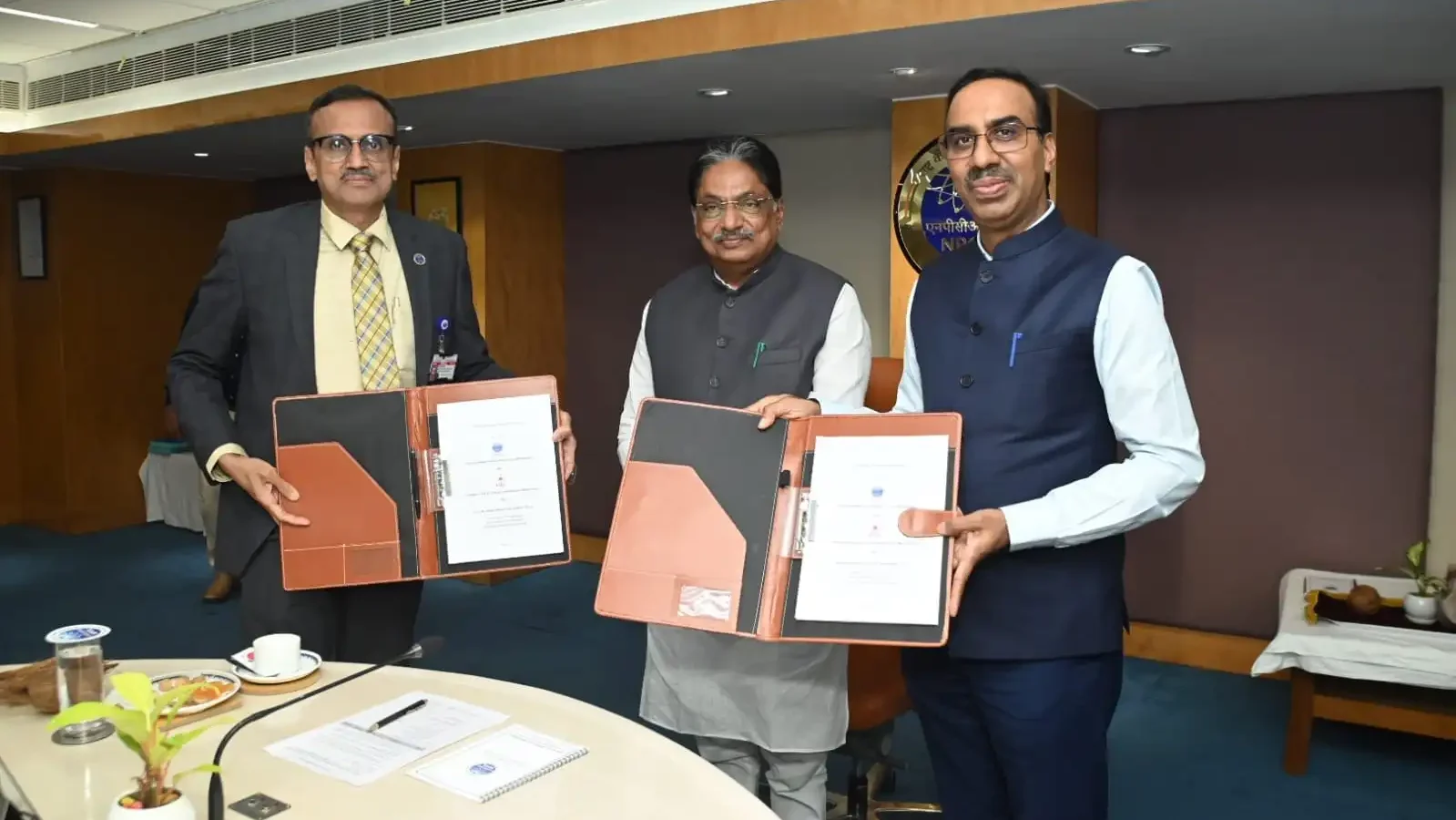
Gujarat State Electricity Corporation Limited (GSECL) and Nuclear Power Corporation of India Limited (NPCIL) have signed a Memorandum of Understanding (MoU) to explore the development of new nuclear power projects in Gujarat.
The proposed initiative includes a nearly 4,000 MW nuclear power project at Dhuvaran in Anand district, with potential investment estimated at around ₹1 lakh crore. The agreement also marks GSECL’s first entry into the nuclear power sector.
The MoU was signed in the presence of Gujarat Energy Minister Rushikesh Patel, Energy and Petrochemicals Department Principal Secretary and GSECL Chairman Ashwini Kumar (IAS), and NPCIL Chairman and Managing Director V. Rajesh.
GSECL Enters Nuclear Power Sector
GSECL has traditionally been involved in electricity generation through conventional and renewable–energy projects. Its proposed entry into nuclear power represents a new expansion of Gujarat’s electricity-generation portfolio.
The proposed nuclear capacity is expected to add a significant source of firm, low-carbon electricity to the state’s energy mix.
Gujarat has been rapidly expanding its solar and wind capacity and has set a target of establishing more than 100 GW of renewable-energy capacity by 2030. Nuclear power could complement this renewable capacity by providing continuous electricity generation to support grid reliability.
Proposed 4,000 MW Dhuvaran Project
The proposed project at Dhuvaran is expected to have a capacity of approximately 4,000 MW. the potential investment associated with the project is estimated at nearly ₹1 lakh crore, making it one of the major proposed power-sector investments in Gujarat.
However, the project is currently at the MoU and assessment stage. Further progress will depend on site suitability, technical and economic feasibility, and the receipt of necessary statutory and regulatory approvals.
GSECL and NPCIL Roles
Under the MoU, GSECL will undertake an assessment of land availability and supporting infrastructure required for the proposed development.
NPCIL will provide technical expertise and undertake site surveys and technical studies as part of the assessment process.
The next stage of development will be determined based on the outcome of technical and economic feasibility assessments and the availability of required statutory clearances.
Nuclear Power to Complement Renewable Energy
Gujarat is targeting more than 100 GW of renewable-energy capacity by 2030, with solar and wind expected to form a major part of the state’s future electricity mix.
While renewable energy is essential for reducing emissions, solar and wind generation is dependent on natural conditions. Nuclear power can provide firm generation and operate independently of daily solar availability or short-term weather variations.
The proposed nuclear project could therefore complement Gujarat’s growing renewable-energy portfolio and contribute to a more diversified electricity-generation mix.
Potential Economic Impact
A nuclear power project of approximately 4,000 MW could generate significant economic activity if it progresses to construction.
Potential areas of impact include employment generation, infrastructure development, engineering and construction activity, logistics, equipment supply and growth of supporting industries.
The project could also strengthen Gujarat’s position as a major energy and industrial hub while supporting the state’s long-term electricity requirements.
Part of India’s Expanding Nuclear Energy Push
The GSECL–NPCIL agreement comes as India expands its focus on nuclear energy as part of its long-term low-carbon electricity strategy.
The country’s nuclear programm is expected to play a larger role in meeting rising electricity demand while supporting the transition toward a lower-carbon energy system.
For Gujarat, the proposed Dhuvaran project would represent a new addition to its energy portfolio alongside large-scale solar, wind, thermal and other power-generation assets.