UltraTech Cement has achieved a historic milestone by becoming the first cement company in India to surpass 2 GW of captive green energy capacity, combining utility solar, wind, and waste heat recovery systems.
Key Highlights
- Total Green Energy – 2,024 MW
- Renewable Energy – 1,580 MW
- WHRS Capacity – 444 MW
- New Wind Capacity – 116.55 MW
- Wind Turbines – 37 Suzlon turbines × 3.15 MW
- Wind Project – Barmer, Rajasthan
- New WHRS – 10 MW at Sarlanagar, Karnataka
- Current Green Energy Share – ~48% of power requirements
- FY26 Green Capacity Added – 430 MW
- 2030 Target – 85% green energy in total power mix
- 2050 Target – 100% renewable electricity under RE100
UltraTech Cement Limited, the Aditya Birla Group company and the world’s largest cement company excluding China, has become the first cement company in India to commission more than 2 GW of green energy capacity for captive use.
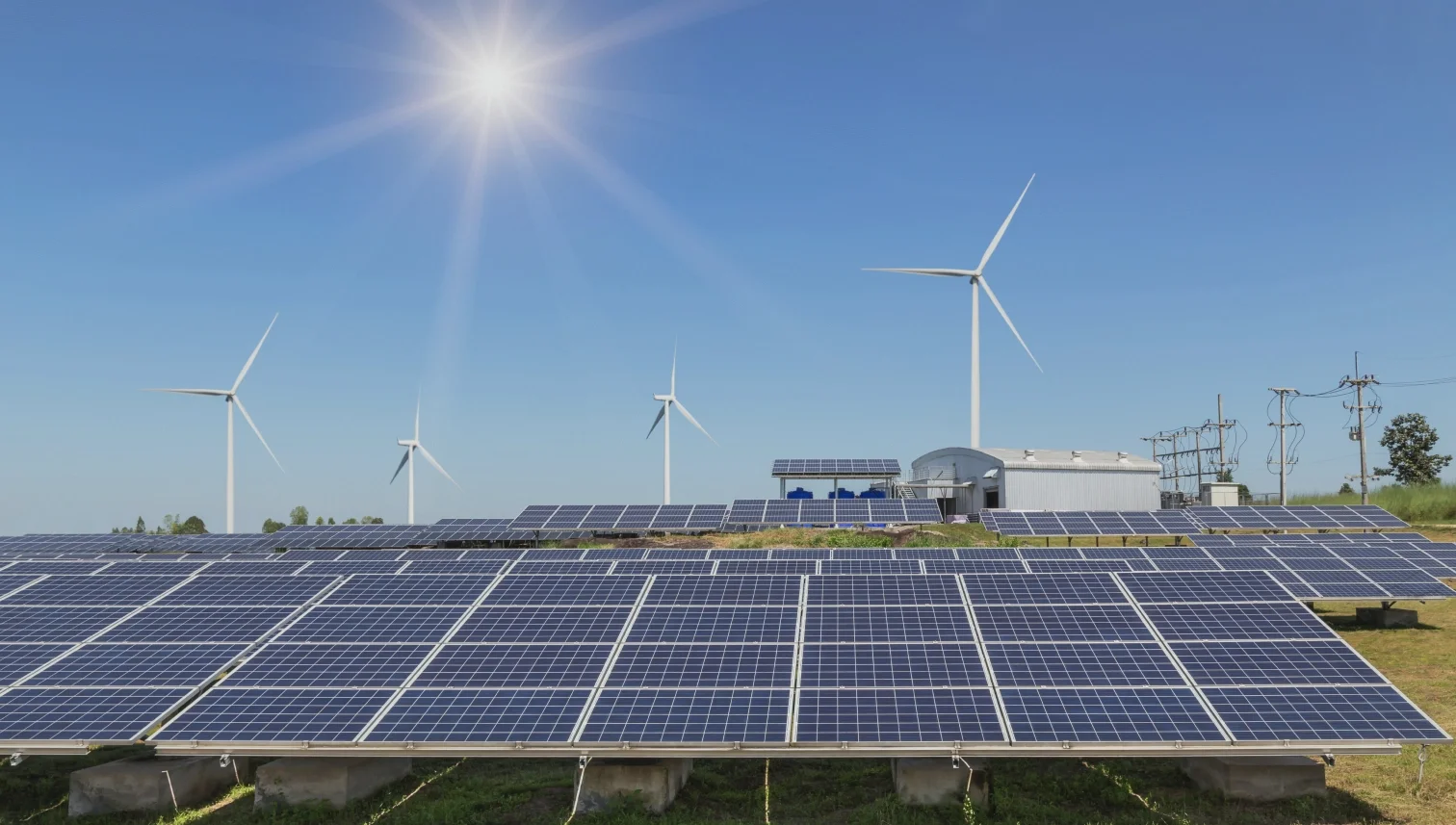
The company has commissioned 116.55 MW of wind capacity at its Inter-State Transmission System (ISTS)-connected wind-solar hybrid project in Barmer, Rajasthan. The newly commissioned wind capacity comprises 37 Suzlon wind turbines, each rated at 3.15 MW, taking the total capacity to exactly 116.55 MW.
Alongside the wind project, UltraTech has commissioned an additional 10 MW Waste Heat Recovery System (WHRS) capacity at its Sarlanagar Cement Works in Karnataka.
With these additions, UltraTech’s cumulative installed green energy capacity has reached 2,024 MW, comprising 1,580 MW of renewable energy capacity and 444 MW of WHRS capacity.
Green Energy Meets 48% of Power Requirements
UltraTech’s 2,024 MW green-energy portfolio currently meets approximately 48% of the company’s power requirements.
The milestone highlights the company’s strategy of combining renewable generation, waste-heat recovery and energy storage to reduce its dependence on conventional electricity and fossil-fuel-based power.
The company said that during FY27 so far, nearly one-third of its 76 manufacturing units in India have maintained green-energy utilisation above 50% of their electricity requirements. Five of these units have achieved green-energy utilisation of more than 95%.
430 MW Commissioned in FY26
UltraTech has continued to accelerate its green-energy deployment. The company commissioned 430 MW of green energy capacity during FY26, adding to its renewable and WHRS portfolio.
The company is also progressively integrating Battery Energy Storage Systems (BESS) across its operations. Energy storage is expected to help UltraTech increase renewable-energy utilisation while improving the reliability of electricity supplied to its energy-intensive cement manufacturing operations.
In 2025, UltraTech operationalised an on-site hybrid round-the-clock renewable-energy project at Sewagram Cement Works in Gujarat, combining solar, wind and battery storage.
No New Captive Thermal Capacity for More Than a Decade
As part of its decarbonisation strategy, UltraTech has not invested in new captive thermal power capacity for more than 10 years, including for greenfield projects and brownfield expansions at its integrated manufacturing units.
Instead, the company has increasingly focused on renewable energy, WHRS, hybrid projects and BESS to address its electricity requirements.
The strategy also provides an energy-security benefit by reducing dependence on conventional grid power and exposure to volatility in coal and electricity prices.
UltraTech Targets 85% Green Energy by 2030
The company aims to increase the share of green energy in its total power mix to 85% by 2030.
Separately, as a member of RE100, UltraTech has committed to meeting 100% of its electricity requirements through renewable sources by 2050.
The latest 2,024 MW milestone therefore represents an important step in the company’s broader energy-transition strategy.
For the cement industry, UltraTech’s approach demonstrates how large energy-intensive manufacturing operations can combine wind, solar, wind-solar hybrid projects, WHRS and BESS to progressively increase renewable-energy utilisation while maintaining operational reliability.